Bathrooms are one of the most used areas in any home or commercial space, but they are also the most prone to stains, mold, and bacteria buildup. In humid environments and busy households in Chicago, bathrooms can quickly develop stubborn grime that regular cleaning cannot handle.
This guide explains how to effectively remove tough bathroom stains and mold while keeping your space clean, fresh, and hygienic.
Why Bathroom Stains and Mold Are So Common
Bathrooms are constantly exposed to:
- Moisture
- Heat
- Soap residue
- Hard water minerals
The result:
A perfect environment for:
- Mold growth
- Yellow stains
- Soap scum buildup
- Hard water deposits
1. Removing Mold from Bathroom Tiles
Mold usually appears in damp areas like showers and tile corners.
Where it grows:
- Tile grout
- Shower corners
- Ceiling edges
- Around tubs
How to remove it:
- Apply a strong bathroom disinfectant or mold remover
- Scrub with a stiff brush
- Let it sit for a few minutes
- Rinse thoroughly with warm water
Pro tip:
Keep the bathroom ventilated after cleaning to prevent regrowth.
2. Cleaning Soap Scum from Showers and Bathtubs
Soap scum builds up when soap mixes with hard water.
Common areas affected:
- Shower doors
- Bathtub walls
- Faucets
- Tiles
How to clean it:
- Use a vinegar-based solution or bathroom cleaner
- Spray and let it sit for 10–15 minutes
- Scrub with a sponge or brush
- Rinse with warm water
3. Removing Hard Water Stains
Hard water leaves white or cloudy stains on surfaces.
Affected areas:
- Glass shower doors
- Sinks
- Faucets
- Tiles
Cleaning method:
- Use vinegar or descaling solution
- Apply directly to stains
- Scrub gently with a non-abrasive pad
- Dry with a microfiber cloth
4. Cleaning Toilet Stains and Buildup
Toilets can develop stains and bacteria if not cleaned properly.
Steps:
- Apply toilet cleaner inside bowl
- Let it sit for a few minutes
- Scrub under the rim and inside bowl
- Clean exterior surfaces and handle
Important:
Always disinfect handles and flush buttons—they are high-touch areas.
5. Removing Mold from Bathroom Ceilings
Ceilings often get ignored but can develop hidden mold.
How to clean:
- Use mold removal spray
- Wipe gently with a cloth or sponge
- Ensure proper ventilation afterward
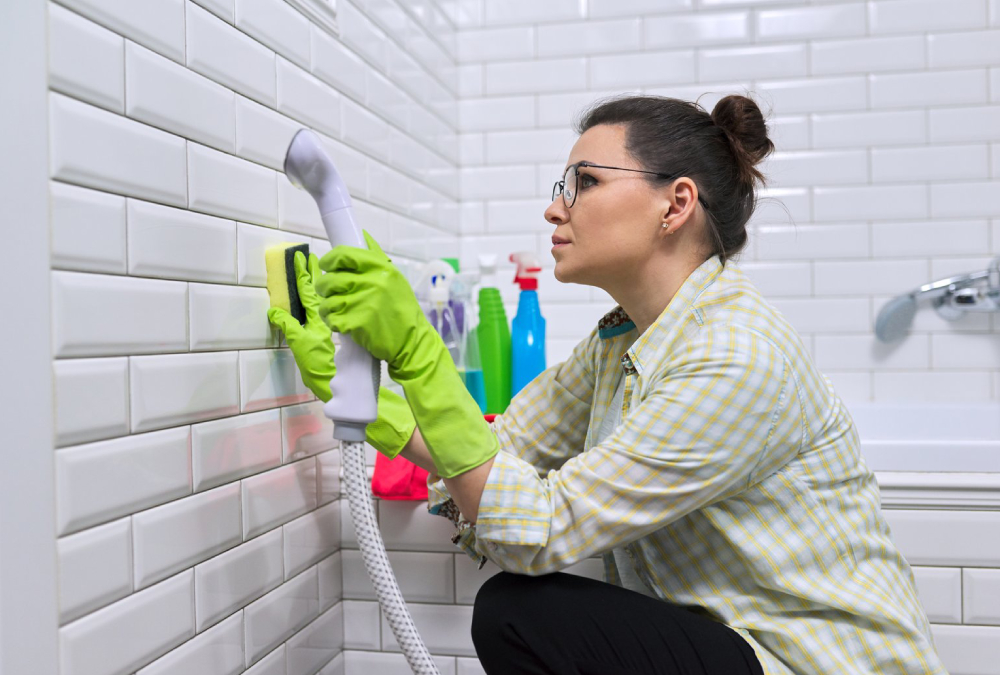
6. Cleaning Bathroom Grout Lines
Grout is one of the dirtiest hidden areas.
What builds up:
- Dirt
- Mold
- Soap residue
Cleaning method:
- Apply baking soda paste or grout cleaner
- Scrub with a toothbrush or grout brush
- Rinse thoroughly
7. Mirror and Glass Cleaning
Bathrooms often have water spots and streaks on mirrors.
Steps:
- Spray glass cleaner or vinegar solution
- Wipe with microfiber cloth
- Buff for a streak-free shine
8. Sink and Faucet Cleaning
Sinks collect toothpaste, soap, and water stains.
How to clean:
- Scrub sink basin with disinfectant
- Clean faucet handles and edges
- Remove buildup around drain area
9. Floor Deep Cleaning
Bathroom floors accumulate moisture and dirt.
Steps:
- Sweep or vacuum first
- Mop with disinfectant solution
- Focus on corners and edges
10. Preventing Mold Growth
Prevention is just as important as cleaning.
Tips:
- Keep bathroom ventilated
- Use exhaust fans
- Wipe wet surfaces after use
- Fix leaks immediately
Deep Cleaning Tips for Germ-Free Bathrooms
1. Use Proper Disinfectants
Not all cleaners kill bacteria effectively.
Use:
- EPA-approved disinfectants
- Mold and mildew cleaners
- Antibacterial solutions
2. Clean High-Touch Areas Daily
These include:
- Door handles
- Faucet knobs
- Light switches
- Flush buttons
3. Don’t Ignore Hidden Corners
Germs often hide in:
- Behind toilets
- Under sinks
- Tile edges
4. Dry Surfaces After Cleaning
Moisture encourages mold growth.
5. Maintain Regular Cleaning Schedule
- Daily: light cleaning
- Weekly: deep cleaning
- Monthly: full sanitization
Why Bathroom Sanitization Is Critical for Health
1. Prevents Bacterial Infections
Bathrooms can spread:
- E. coli
- Staphylococcus
- Other harmful bacteria
2. Reduces Mold-Related Health Issues
Mold exposure can cause:
- Allergies
- Asthma flare-ups
- Respiratory irritation
3. Improves Air Quality
A clean bathroom reduces:
- Bad odors
- Airborne bacteria
- Moisture buildup
4. Protects Family Health
Especially important for:
- Children
- Elderly individuals
- People with weak immune systems
5. Enhances Overall Home Hygiene
A clean bathroom improves the cleanliness of the entire home.
Common Bathroom Cleaning Mistakes
1. Only cleaning visible areas
Hidden mold continues to grow.
2. Not using strong enough cleaners
Soap alone cannot kill bacteria.
3. Ignoring ventilation
Moisture buildup leads to mold.
4. Skipping grout and corners
These are the dirtiest areas.
Final Thoughts
Bathroom deep cleaning is essential for maintaining a safe and healthy home. In Chicago homes, where humidity and seasonal changes can increase moisture buildup, regular deep cleaning helps prevent stains, mold, and bacteria growth.
A properly cleaned bathroom:
- Eliminates germs and odors
- Prevents mold growth
- Improves hygiene and comfort
- Protects overall health
In short, a clean bathroom is not just about appearance—it is about health and safety for your entire household.