
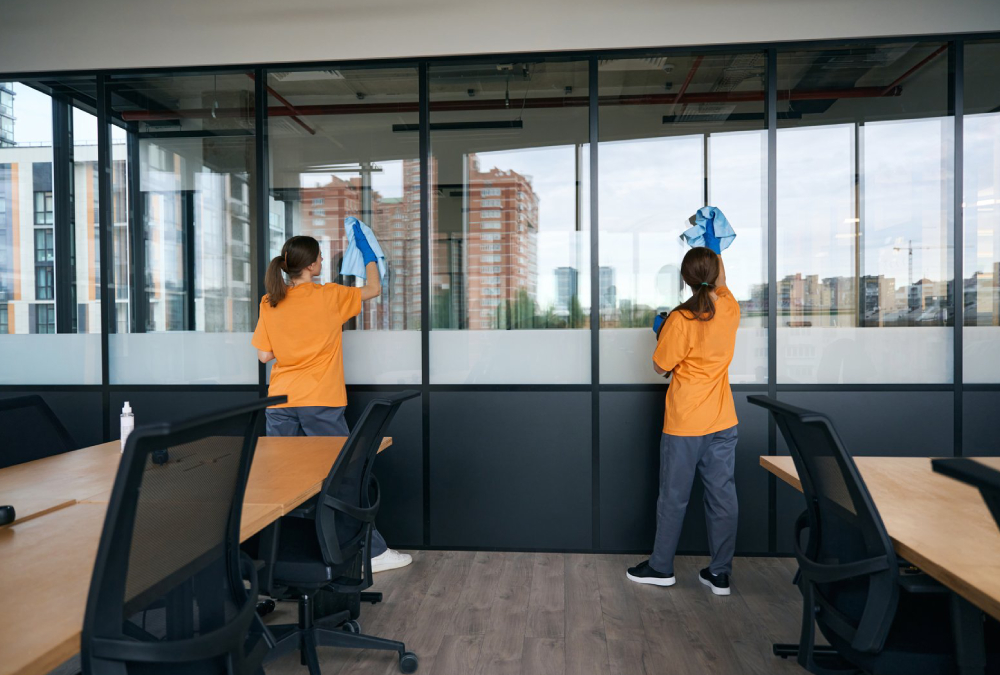
A clean office is more than just a visually appealing workspace—it is a critical factor that directly influences employee productivity, mental clarity, health, and overall business performance. In busy commercial environments like Chicago, where companies operate in fast-paced and competitive markets, maintaining a clean office is not optional—it is a necessity.
Many business owners focus on salaries, tools, and workflows, but overlook one of the simplest productivity boosters: cleanliness.
This article explains why office cleaning plays a major role in employee performance and why investing in professional cleaning services can significantly improve your workplace efficiency.
The Connection Between Cleanliness and Productivity
Workplace cleanliness has a direct psychological and physical impact on employees.
How a clean office improves productivity:
- Reduces distractions
- Improves focus
- Enhances mood
- Creates a structured environment
- Encourages discipline and professionalism
A cluttered or dirty workspace often leads to mental overload, making it harder for employees to concentrate on tasks.
1. Cleaner Spaces Reduce Mental Stress
Employees spend a large portion of their day at work. If the environment is messy or unclean, it creates subconscious stress.
Effects of a messy office:
- Increased anxiety
- Reduced focus
- Mental fatigue
- Lower job satisfaction
Why cleanliness helps:
A clean office provides a sense of order, which helps the brain function more efficiently. Employees can think clearly without visual distractions.
2. Fewer Sick Days and Health Issues
One of the most important benefits of office cleaning is improved workplace health.
Offices are shared environments where germs spread quickly through:
- Door handles
- Keyboards
- Desks
- Restrooms
- Shared equipment
Common illnesses in poorly cleaned offices:
- Colds and flu
- Allergies
- Respiratory infections
- Skin irritation
Impact on productivity:
When employees get sick more often:
- Absenteeism increases
- Work slows down
- Deadlines are missed
A clean office reduces germ buildup and helps maintain a healthier workforce.
3. Improved Focus and Efficiency
Cluttered environments overload the brain with unnecessary visual information.
What happens in a messy office:
- Employees get distracted easily
- Tasks take longer to complete
- Errors increase
Clean office benefits:
- Clear thinking
- Faster task completion
- Better organization of work
When the environment is clean, employees naturally become more structured in their work habits.
4. Better First Impressions for Clients
In business, first impressions matter.
When clients or partners visit your office, they immediately notice:
- Cleanliness of space
- Organization
- Professional atmosphere
What a clean office communicates:
- Reliability
- Attention to detail
- Professionalism
- Trustworthiness
A dirty or disorganized office can damage your brand image instantly.
5. Increased Employee Morale
Employees feel more valued when they work in a clean environment.
Psychological impact:
- Boosts motivation
- Creates pride in workplace
- Encourages responsibility
Result:
Happy employees tend to:
- Work harder
- Stay longer at companies
- Collaborate better
6. Reduced Workplace Clutter Improves Workflow
Clutter slows down daily operations.
Common problems caused by clutter:
- Lost documents
- Disorganized desks
- Wasted time searching for items
Clean office advantage:
Everything has a place, which improves:
- Task efficiency
- Time management
- Workflow clarity
7. Safer Work Environment
Cleanliness also affects workplace safety.
Risks of dirty offices:
- Slips and falls
- Fire hazards (cluttered spaces)
- Poor air quality
How cleaning helps:
- Clear walkways reduce accidents
- Proper disposal of waste improves safety
- Clean air reduces health risks
8. Better Air Quality in the Workplace
Office air quality is often overlooked but extremely important.
Dust, allergens, and pollutants can build up in:
- Carpets
- Air vents
- Furniture
- Curtains
Effects of poor air quality:
- Headaches
- Fatigue
- Reduced concentration
Clean office benefits:
- Fresher air
- Improved breathing comfort
- Increased alertness
9. Supports Professional Business Image
A clean office is part of your brand identity.
What clients think when they see a clean office:
- The company is organized
- The business is trustworthy
- Operations are well-managed
Why it matters:
In competitive markets like Chicago, image plays a big role in winning clients.
10. Boosts Employee Discipline and Responsibility
Clean environments naturally encourage better behavior.
Impact on employees:
- Encourages tidiness
- Builds responsibility
- Improves respect for workspace
DIY Cleaning vs Professional Office Cleaning
DIY Cleaning
Suitable for:
- Small offices
- Light maintenance
However:
- Often inconsistent
- Lacks deep cleaning standards
Professional Cleaning
Ideal for:
- Medium to large offices
- High-traffic workplaces
Benefits:
- Scheduled consistency
- Deep sanitization
- Specialized equipment
- Better long-term results
How Often Should Offices Be Cleaned?
It depends on office size and usage.
General recommendation:
- Daily light cleaning (trash, desks, surfaces)
- Weekly deep cleaning
- Monthly detailed cleaning
Common Office Cleaning Mistakes
1. Only cleaning visible areas
Hidden germs continue to spread.
2. Ignoring shared equipment
Keyboards and phones are major germ hotspots.
3. Inconsistent cleaning schedule
Leads to buildup and reduced effectiveness.
4. Overlooking restrooms
A major factor in employee satisfaction.
Final Thoughts
Office cleaning is not just a maintenance task—it is a strategic investment in productivity, health, and business success.
A clean workspace:
- Improves employee performance
- Reduces sick days
- Enhances company image
- Supports mental clarity
For businesses in Chicago, where competition is strong and work environments are fast-paced, maintaining a clean office can be the difference between average performance and high productivity.
Simply put:
A clean office creates a more efficient, motivated, and successful workplace.